Why I practice Relational Life Therapy (RLT)
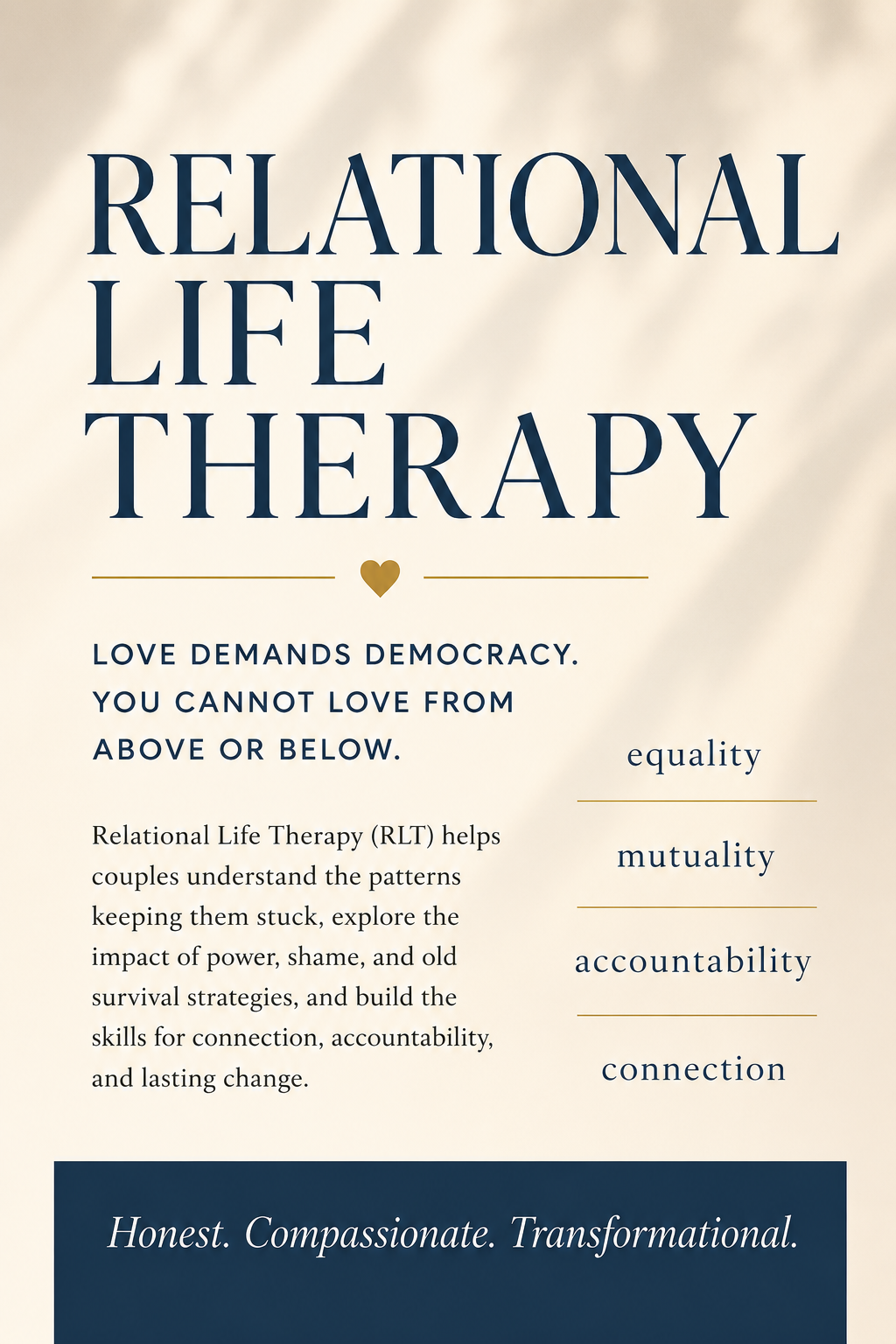
Helping couples move beyond communication skills toward lasting change
Most people have heard that “relationships take work.” But very few people have ever been taught what that work actually is.
Many couples come to therapy having already read books, listened to podcasts, or learned communication skills. They often know what they should be doing—but in moments of conflict, hurt, fear, or disconnection, they find themselves unable to do it.
Relational Life Therapy (RLT) is different.
Rather than focusing only on communication techniques, RLT helps couples understand why they become stuck in the same painful patterns, what gets in the way of using healthier skills, and how to create meaningful, lasting change.
Developed by Terry Real, RLT is a direct, compassionate, and highly practical model of couples therapy that combines emotional insight with concrete behavioural change. It is especially effective for couples navigating recurring conflict, infidelity recovery, intimacy concerns, emotional disconnection, and relationships that feel caught in repetitive cycles.
What makes RLT different?
Unlike many traditional approaches to couples therapy, RLT recognizes that healthy relationships require more than empathy and good communication.
One of the core principles of RLT is that love demands democracy. Healthy relationships cannot thrive when one partner consistently occupies a position of power over the other—or when one partner habitually sacrifices their own needs to preserve the relationship. Simply put, we cannot love one another from “above” or from “below.”
RLT helps couples recognize the subtle ways that power, shame, self-protection, and cultural messages influence their relationship. This includes examining how societal expectations—including patriarchal beliefs about gender, strength, vulnerability, caregiving, and emotional expression—can affect both partners. Rather than blaming individuals, RLT explores how these larger systems shape all of us and teaches couples how to build relationships based on equality, authenticity, accountability, and mutual respect.
RLT is also refreshingly honest. Rather than remaining neutral about behaviours that damage relationships, RLT believes that accountability creates freedom. Therapy is an active process where both partners are supported—and challenged—with compassion to examine their own contributions to relational patterns.
This work asks a lot—and offers a lot.
Relational Life Therapy is not a passive form of therapy.
It is designed for individuals and couples who are willing to engage in honest self-reflection, practice new relational skills, and tolerate the discomfort that often comes with meaningful personal growth. While this work can be challenging, many people find that it leads to deeper connection, greater emotional safety, increased intimacy, and healthier ways of relating that extend beyond their romantic relationship.
What does RLT therapy look like?
Although every couple’s journey is unique, treatment generally follows three broad phases.
Phase One: Assessment and Treatment Planning
During the first several sessions, we develop a clear understanding of your relationship, your goals, and the patterns that keep you feeling stuck. We also explore each partner’s family of origin and relational history to better understand how those experiences continue to influence the relationship today.
Together, we create a treatment plan that identifies the areas each partner will work on throughout therapy.
Phase Two: Understanding Your Adaptive Child
RLT recognizes that many of our current relationship struggles developed as creative adaptations to our earliest relationships.
Together, we explore what RLT calls your Adaptive Child—the protective ways you learned to cope, survive, and connect. While these adaptations were often necessary earlier in life, they may now create conflict or distance in adult relationships.
This work helps foster greater self-awareness, compassion, accountability, and empathy between partners while creating opportunities for healing long-standing relational wounds.
Phase Three: Building New Relational Skills
Insight alone does not change relationships.
In this phase, we focus on practicing healthier ways of relating. You’ll learn concrete relational skills that help reduce conflict, repair ruptures, increase accountability, strengthen intimacy, and build a relationship that feels more connected, respectful, and emotionally secure.
Throughout treatment, therapy remains active, collaborative, and tailored to your unique relationship.
Angela’s RLT Training
Angela is currently a Relational Life Therapy Certificate Student pursuing certification through the Relational Life Institute. As part of this process, she is completing advanced practicum training while integrating RLT principles into her work with couples.
Angela is passionate about RLT because of its combination of honesty, compassion, accountability, and practical skill-building. She values the model’s commitment to helping couples move beyond blame and power struggles toward relationships grounded in equality, authenticity, and mutual care.
Is RLT right for you?
RLT may be a good fit if you and your partner are willing to:
honestly examine your own contributions to relationship patterns
practice new ways of communicating and relating
become more accountable without shame or blame
build a relationship based on mutual respect, emotional safety, and partnership
invest in meaningful, lasting change rather than quick fixes
If you’re curious about whether Relational Life Therapy is right for your relationship, I invite you to book a complimentary 20-minute consultation. Together, we can discuss your goals, answer any questions you have about RLT, and determine whether we’re a good fit to work together.